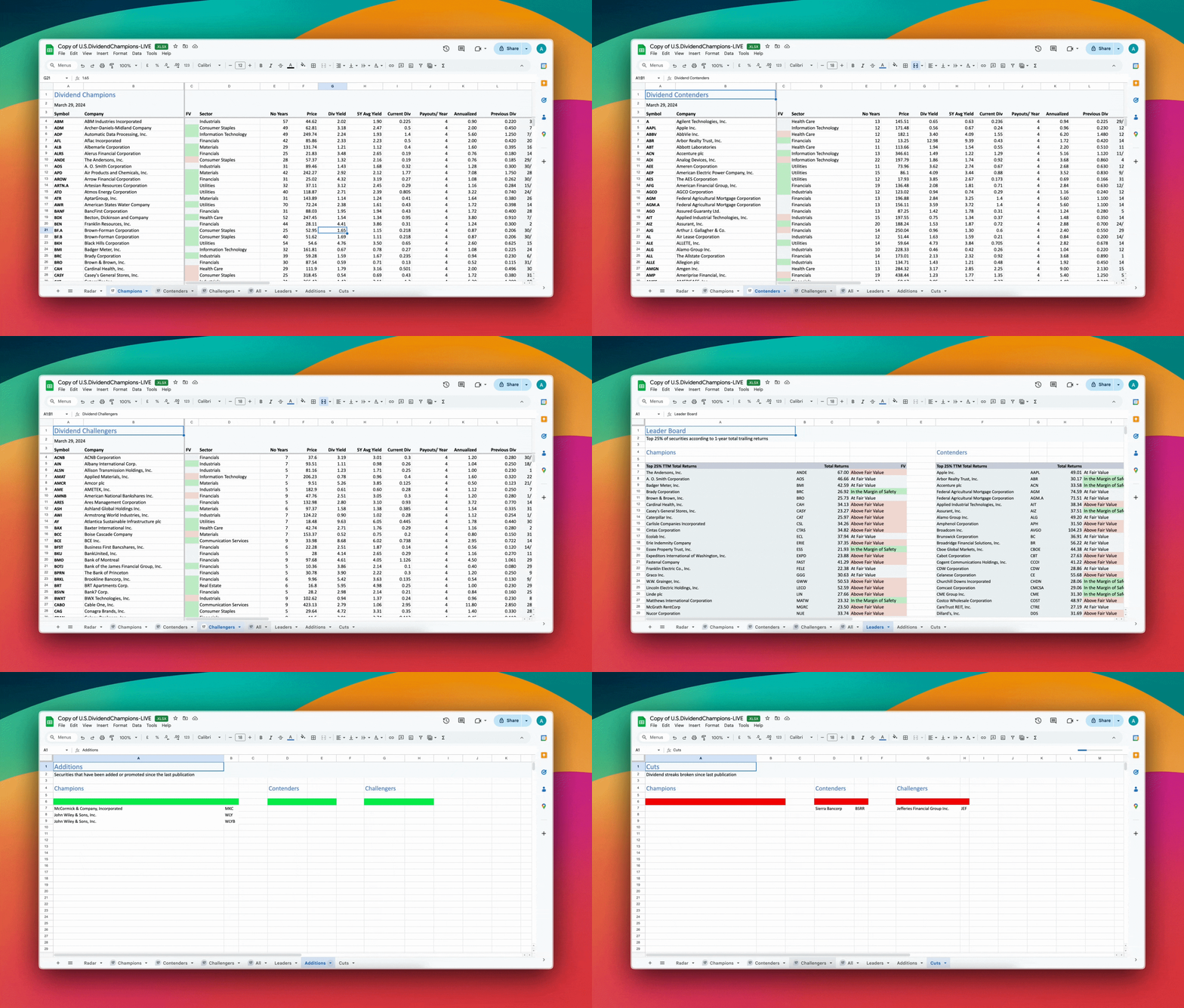
- Caterpillar kept its quarterly dividend at 1.51 per share, holding the yield near 0.89 percent.
- CAT dividends remain supported by strong cash flow and a 32 year growth streak.
- High valuation limits appeal for income investors despite long term dividend reliability.
Dividend update and yield position
Caterpillar declared a quarterly dividend of 1.51 per share, payable May 19, 2026, to shareholders of record on April 20, with an ex dividend date of April 17.
The payout stays unchanged from the prior quarter, marking a pause in growth despite the company’s multi decade history of rising CAT dividends.
The annualized dividend of 6.04 yields roughly 0.89 percent at current prices, well below the five year average of about 1.57 percent.
This lower yield reflects strong share price appreciation rather than dividend expansion.
Caterpillar continues its streak of 32 consecutive years of dividend increases, reinforcing its Dividend Aristocrat status.
Signals from a flat dividend
Keeping the dividend unchanged signals confidence in cash flow durability, especially given Caterpillar’s exposure to construction, mining and energy cycles.
It may also reflect cautious capital allocation as management navigates macro uncertainty, tariffs and cost pressures.
The market is pricing in strong performance, with shares trading near elevated levels including a P/E of 38.2.
Income profile for dividend investors
For investors focused on CAT dividends, the stock remains a quality over yield holding.
Its approximate 0.89 percent yield is modest compared to other industrial names, while five year dividend growth near 7 to 8 percent supports long term compounding.
Metrics such as a Chowder Rule score around 8.5 show moderate appeal for dividend growth but limited immediate income.
At today’s valuation, income focused investors may find the current yield insufficient.
Cash flow support strengthens the case
Caterpillar’s dividend reliability is supported by improving cash flow visibility.
A new 840 million dollar long term energy deal tied to U.S. electricity demand adds multi year revenue stability.
Expected earnings growth of roughly 15 percent and strong profitability metrics further support future dividend increases, even if the payout is currently flat.
Valuation and dividend reliability
The trade off for investors is clear.
Caterpillar offers one of the most reliable dividend histories in the industrial sector, supported by decades of uninterrupted payments.
However, the valuation remains stretched and the yield sits below 1 percent, tilting the stock toward total return rather than income.
This limits present day appeal for pure income investors seeking higher CAT dividends.
Caterpillar remains a dependable option for long term dividend growth and DRIP strategies.
Buyers may prefer to wait for a pullback that lifts the yield closer to historical norms or use the April 17 ex dividend date for tactical income capture.