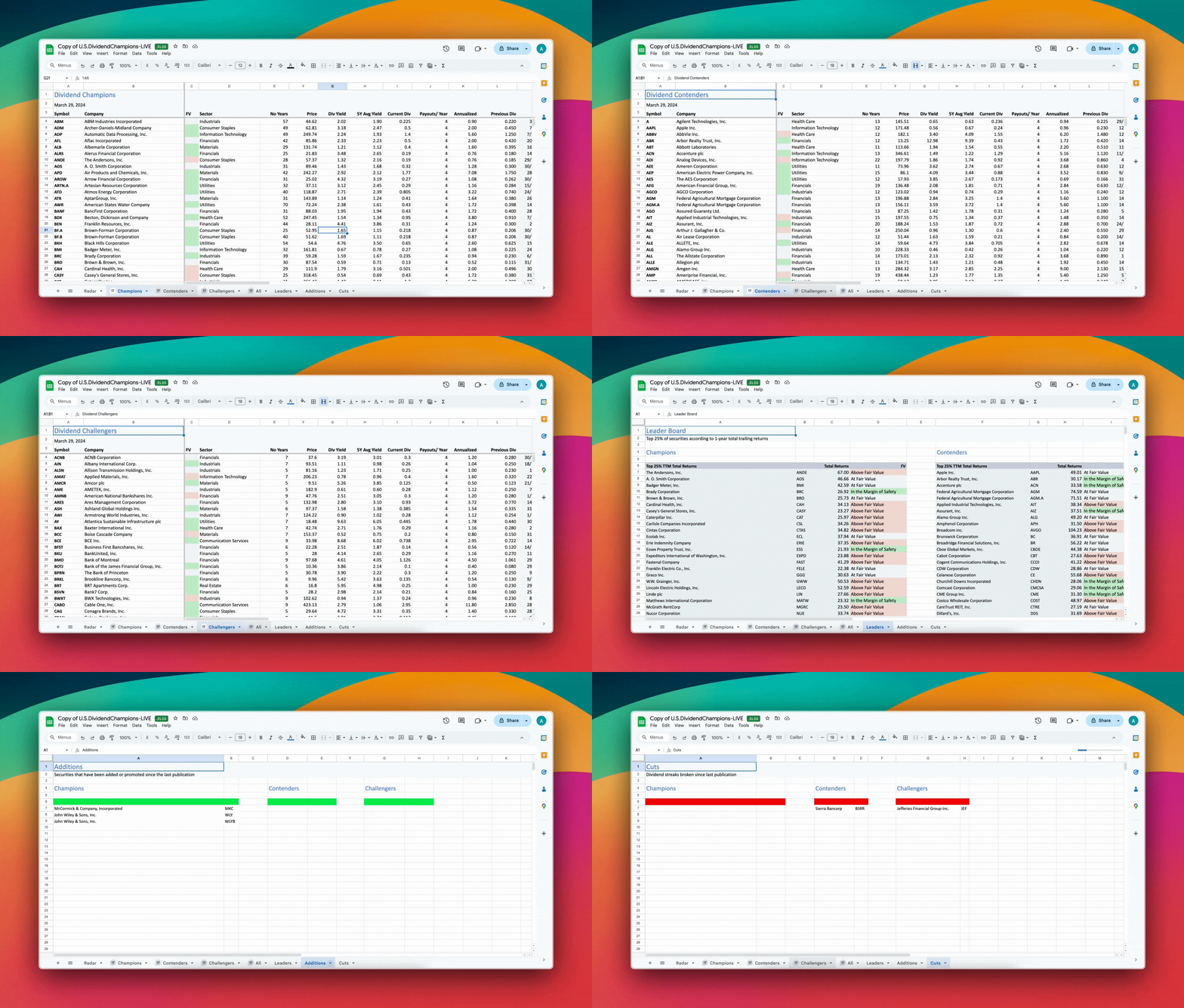
- WMT dividends offer a 0.84% yield with steady long-term growth.
- Over 50 consecutive years of increases highlight strong dividend reliability.
- Recent stock pressure is creating potential entry points for dividend growth investors.
Dividend Snapshot Small Yield Steady Growth
Walmart (NYSE: WMT) continues to stand out for investors focused on WMT dividends and long-term income stability.
The company pays an annualized dividend of $0.992 per share, yielding about 0.84% at a share price near $117.60.
While the yield is modest, growth remains consistent with a roughly 9.0% one-year increase and an 8.6% three-year growth rate.
This positions Walmart as a dividend growth stock rather than a high-yield income play.
Dividend King Status Signals Reliability
Walmart is part of a select group with more than 50 consecutive years of dividend increases.
It contributes to 181 consecutive years of dividend growth alongside other blue-chip peers.
This track record highlights resilience through economic cycles and reinforces confidence in WMT dividends.
For income investors, this consistency lowers the risk of dividend cuts and supports long-term compounding strategies.
Why the Stock Is Under Pressure and Why It Matters
Walmart shares have faced pressure due to margin concerns, including wage inflation and rising e-commerce costs.
Some investors see this as an opportunity, with recent stock pressure may present an entry point for long-term buyers.
Despite short-term challenges, Walmart’s core business remains strong and benefits from its defensive positioning.
This stability is especially valuable during uncertain economic periods.
Growth Engines Supporting Future Dividends
Walmart is expanding beyond traditional retail into higher-margin segments such as e-commerce, digital advertising, and AI initiatives.
These areas are important for sustaining future WMT dividends through improved profitability.
Retail media is gaining traction, with retail media is emerging as a critical high-margin growth lever.
Additionally, Walmart’s $30 billion buyback program signals strong cash flow and supports long-term dividend growth.
Capital Returns Dividends Plus Buybacks
Walmart combines dividends with consistent share repurchases, enhancing shareholder returns.
Buybacks reduce share count, boosting earnings per share and supporting future dividend increases.
This dual strategy strengthens the appeal of WMT dividends for investors focused on total return.
Investor Takeaway Who Should Buy WMT Now
Walmart is best suited for investors seeking steady dividend growth rather than immediate income.
Its long dividend history, defensive business model, and emerging growth drivers make it a reliable option for patient investors.
With shares still below recent highs and fundamentals intact, Walmart remains a reasonable buy-on-weakness candidate for those building long-term dividend portfolios.