- ADP dividends remain supported by strong cash flow despite labor market risks
- Forward yield of 3.13 percent sits well above the five-year average
- Cooling employment trends could slow near-term revenue and dividend growth
Dividend Snapshot and Market Position
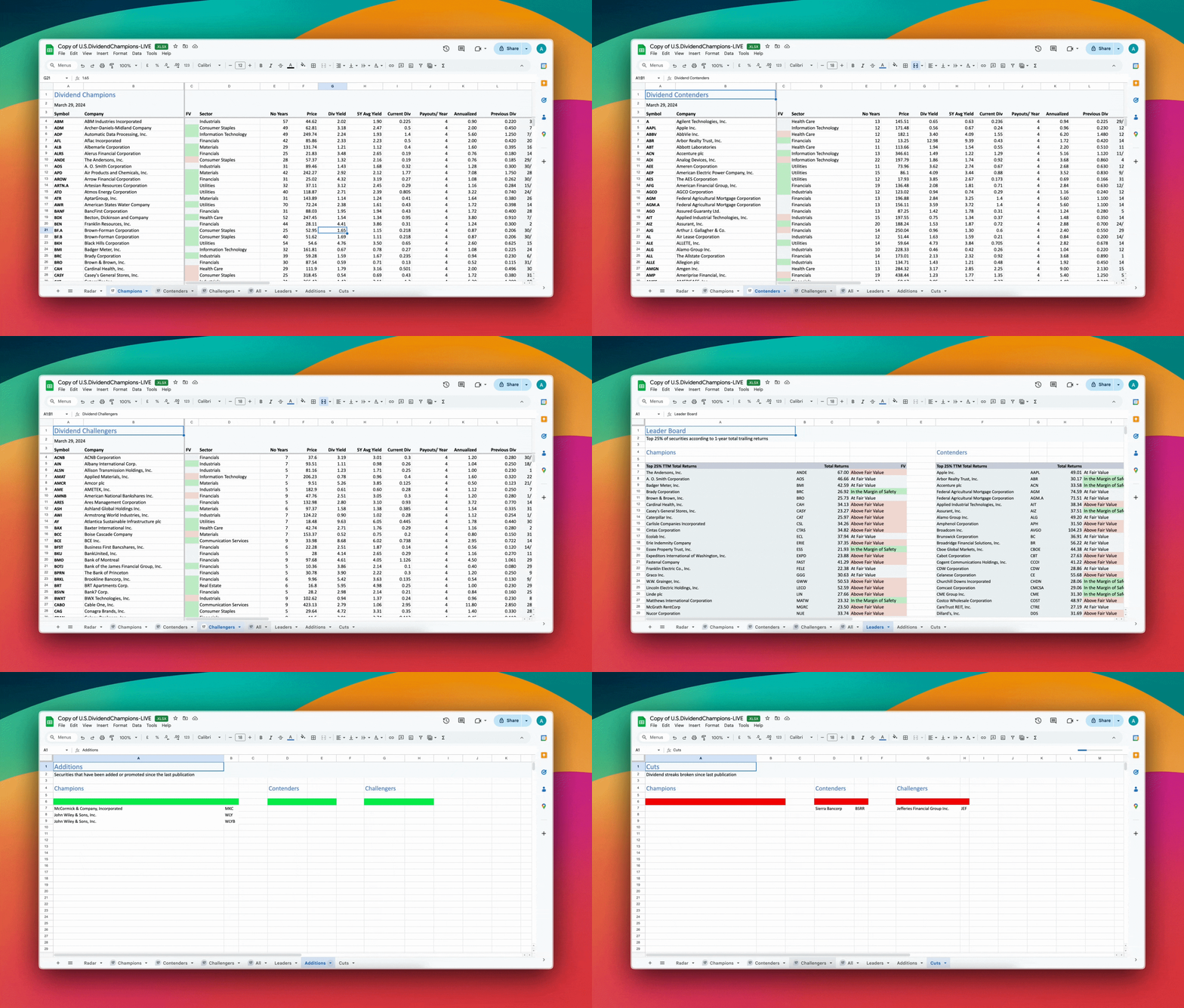
Automatic Data Processing continues to attract income investors with a forward dividend yield of 3.13 percent. This payout, now at 6.80 dollars per share annually, stands meaningfully higher than the five-year average yield of about 2.1 percent.
For investors focused on ADP dividends and long term stability, the mix of elevated yield and steady growth reinforces the stock’s appeal. The dividend has expanded at a five-year growth rate above 12 percent, supported by a Chowder Rule score over 15, highlighting balanced income and growth potential.
Operational Growth and Margin Expansion
Operational performance continues to trend steadily. The company is expected to post approximately 10 percent annual EPS growth, driven by pricing strategies and efficiency improvements supported by automation.
AI tools and advanced data systems are contributing to productivity gains and margin expansion of 70 to 80 basis points, according to here’s why investors hold adp. These improvements strengthen earnings visibility and reinforce long term support for ADP dividends.
Defensive Qualities in a Shifting Economy
ADP benefits from a sticky business model. Payroll and HR services are core operational functions for employers, making switching providers a costly and disruptive process.
This resilience has helped the company outperform both its industry and the broader market over the past three months, as noted in here’s why investors hold adp. For dividend-focused investors, that strength supports confidence in the durability of ADP dividends.
Labor Market Pressure and Revenue Risk
Despite its resilient model, ADP faces headwinds tied to employment trends. Hiring slowdown directly affects payroll volumes, which serve as a core driver of revenue.
Recent indicators point to a cooling U.S. labor market, highlighted by adp stock and paychex face pressure as the jobs market cools. Fewer new hires mean fewer processed paychecks and softer near term service demand.
While ADP maintains strong profitability and prudent management, cyclical softness could temporarily slow dividend growth, even though the payout itself remains secure.
Valuation and Market Expectations
At roughly 20 times earnings, ADP trades near fair value. The valuation reflects its quality profile while also accounting for expected labor related risks.
The elevated yield relative to historical levels indicates that the market is pricing in slower revenue momentum, though not signaling broader structural concerns.
Positioning for Income Focused Investors
ADP continues to appeal to investors seeking reliable dividends, recurring revenue strength, and moderate long term growth. The company’s consistency in raising dividends positions it as a strong consideration for DRIP strategies and passive income portfolios.
The primary trade off remains cyclical sensitivity to labor trends. For investors focused on ADP dividends as a long horizon compounding strategy, near term pressures are likely temporary.
Overall, ADP remains a dependable income generator for those willing to navigate short term employment related fluctuations while benefiting from steady dividend growth supported by durable cash flow.